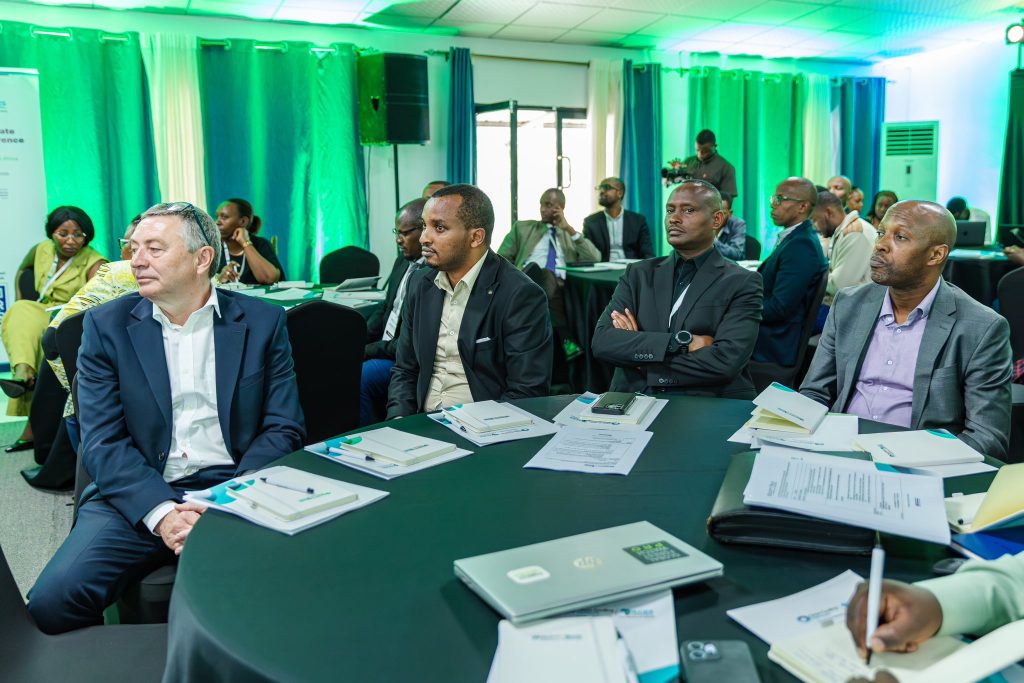
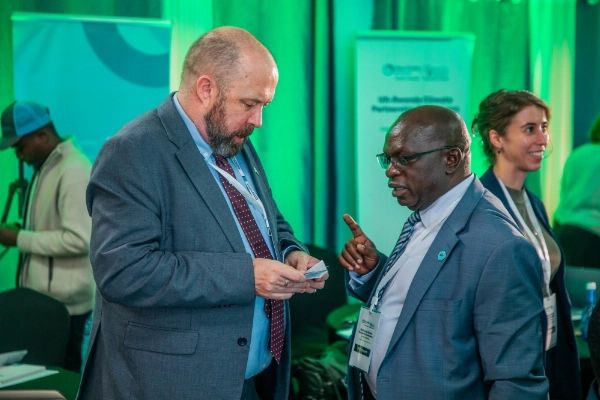
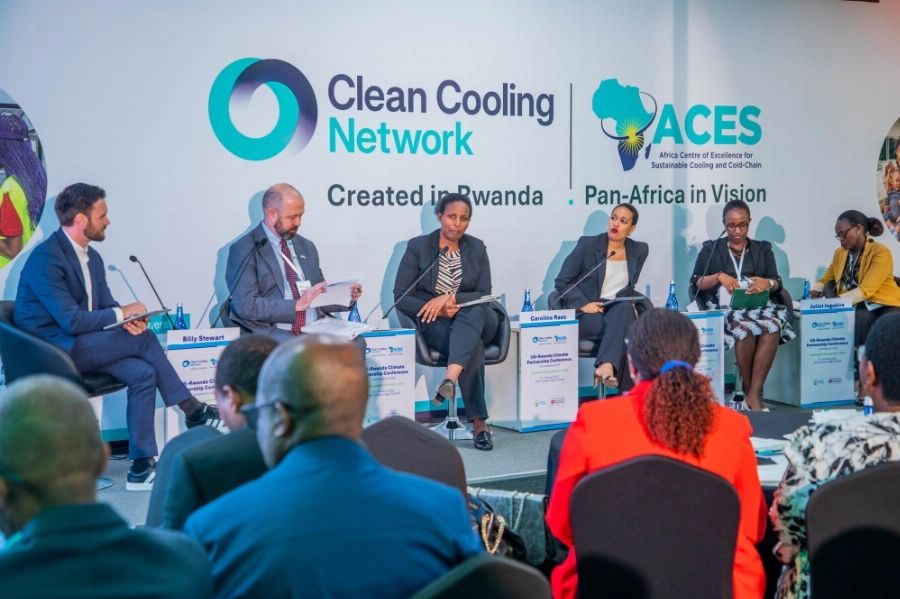
APEFA’s Executive Director, Oscar NZABONIMPA, participated in the UK–Rwanda Climate Partnership Conference held from March 24–25 at the Rubirizi Campus in Kigali. The high-level event brought together over 150 global leaders and stakeholders from government, finance, industry, academia, and development organizations to explore pathways for advancing green investment, innovation, and sustainable infrastructure across Africa.
The two-day conference, convened by the Africa Centre of Excellence for Sustainable Cooling and Cold Chain (ACES), was held under the theme “Catalysing Green Investment in Africa: The UK–Rwanda Climate Partnership.” It served as a platform for dialogue on how to unlock climate finance and accelerate the transition from climate commitments to tangible investments.
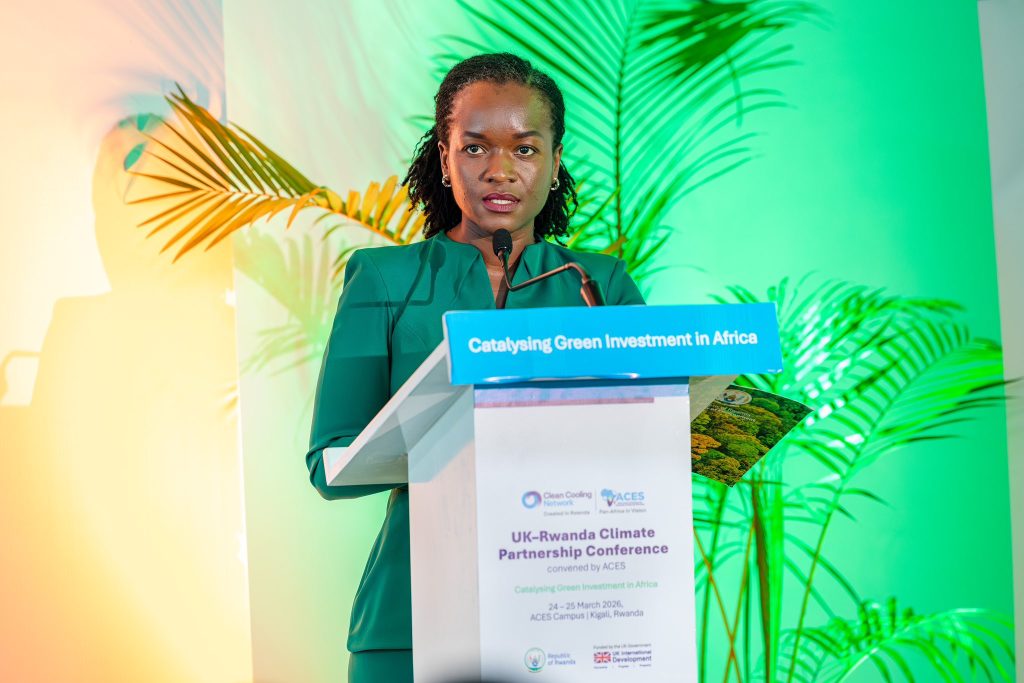
Dr Arakwiye Bernadette, Rwanda’s Minister of Environment, said ACES, established with support from the UK Government and global partners, is designed as a Pan-African hub for sustainable cooling, bringing together research, training, testing, and certification under one roof.
“It’s model is aligned with global best practice, including insights from the UNEP Cool Coalition and the International Energy Agency, which emphasize that sustainable cooling is critical to achieving climate goals while supporting development,” she said.
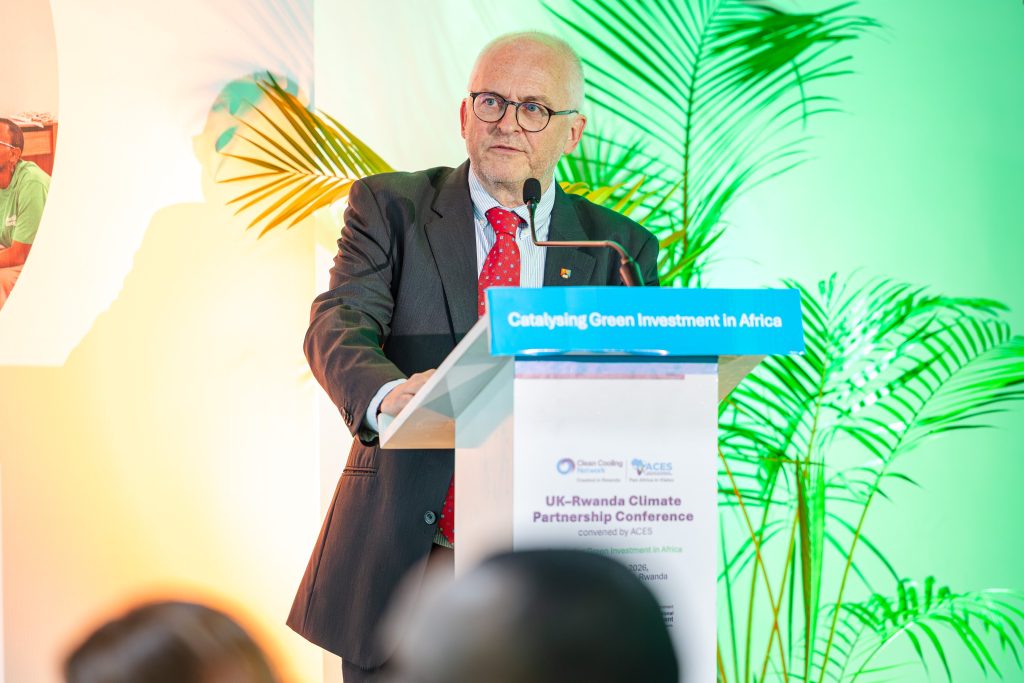
ACES Executive Director, Prof. Toby Peters, emphasized the strength of the UK–Rwanda bilateral partnership, describing it as a shared commitment to advancing practical, investment-driven climate solutions. He underscored the importance of integrated approaches, stating that ACES is designed to strengthen regulatory, technical, business, and workforce capacities necessary to scale green investment across the continent.
The conference ultimately aimed to unlock green finance, foster innovation, and strengthen partnerships that will drive sustainable development across Africa.
APEFA’s participation in this important forum reflects its continued commitment to contributing to climate resilience, sustainable agriculture, and environmental protection through collaboration and knowledge sharing at both national and international levels.