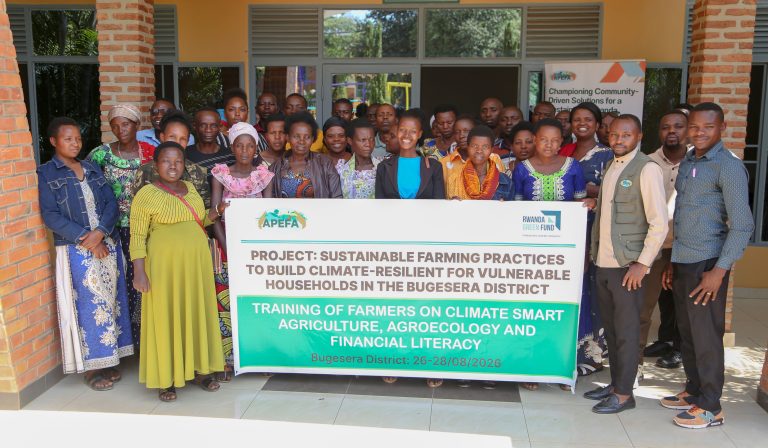
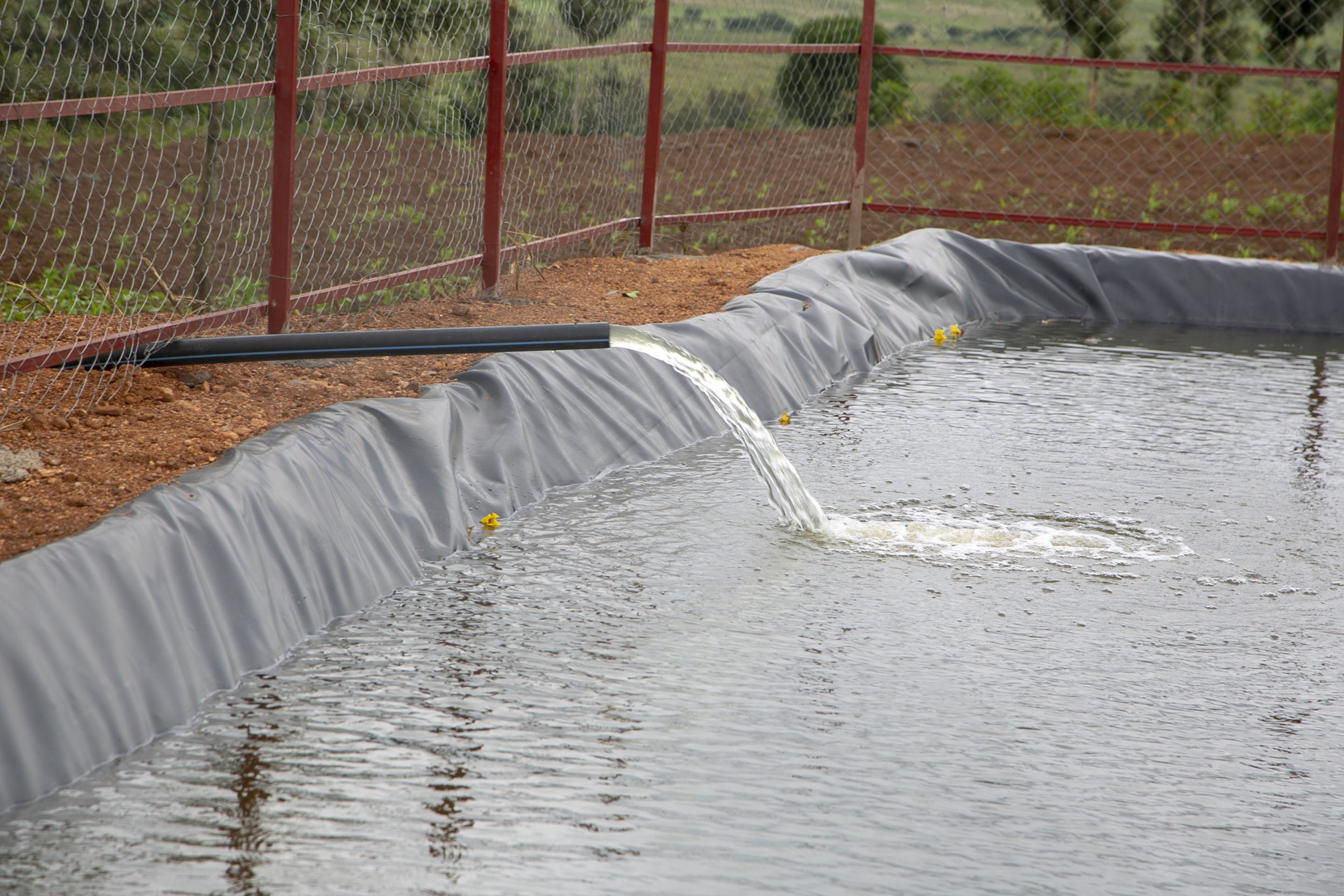
The Action pour la Protection de l’Environnement et la Promotion des Filières Agricoles (APEFA) continues to make significant progress in implementing its flagship project, “Sustainable Farming Practices to Build Climate-Resilient Livelihoods for Vulnerable Households in Bugesera District.”.
During the project third quarter (January–March 2026), the project reached a major milestone, marked by the full installation of solar-powered irrigation systems, the establishment of a productive and functioning tree nursery, and the organization of farmers into structured community groups.
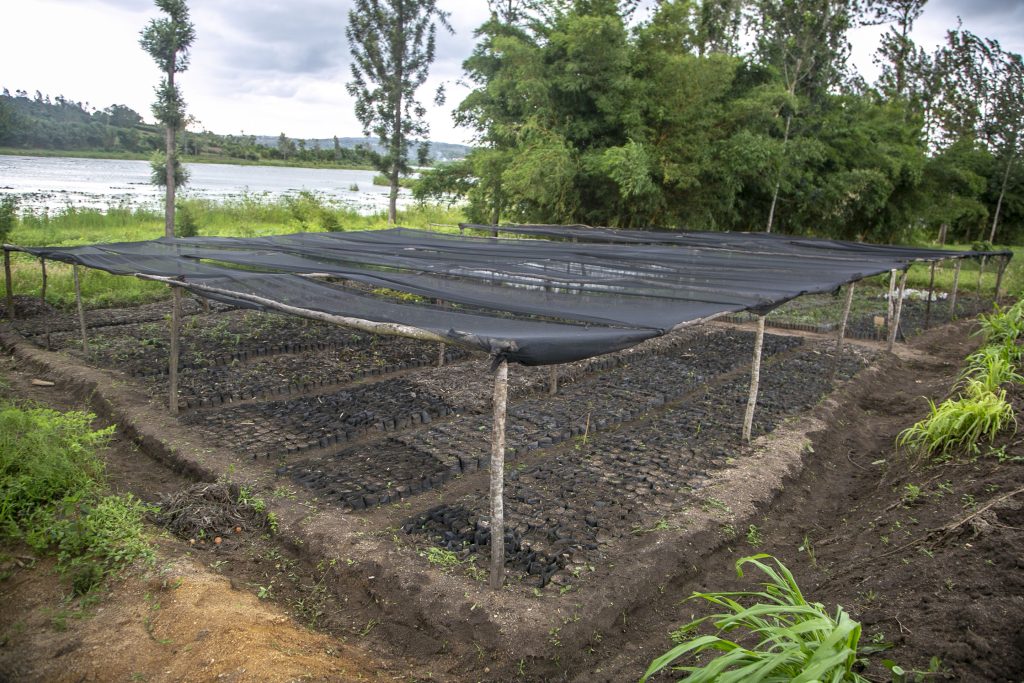
These achievements are laying a strong foundation for sustainable, climate-resilient agriculture across five farmer cooperatives covering 35 hectares of land.
MAJOR INFRASTRUCTURE MILESTONES ACHIEVED
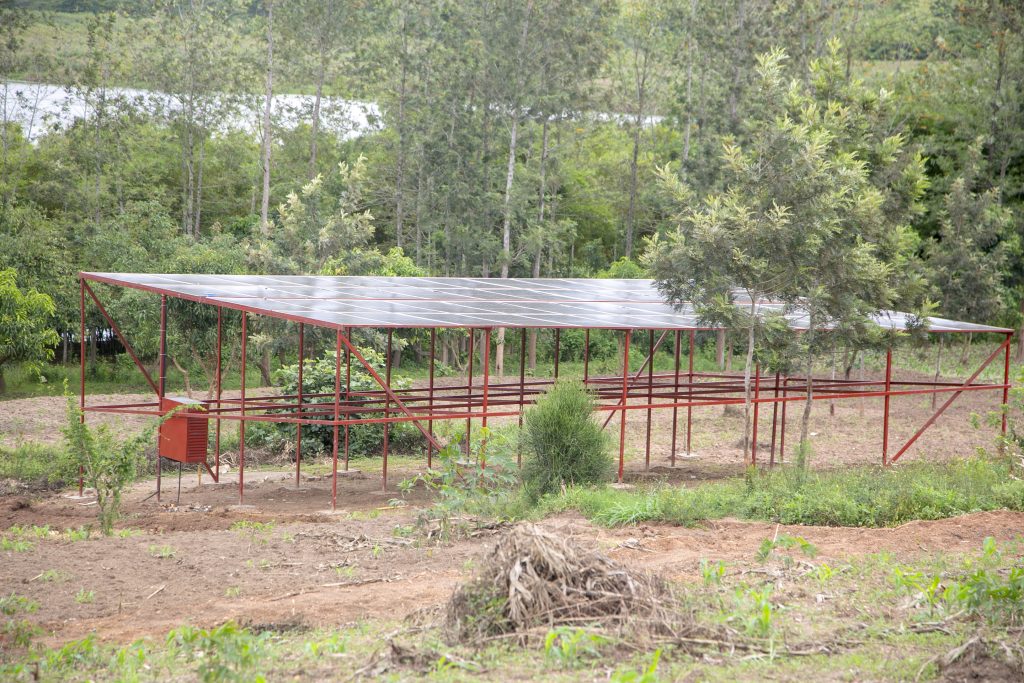
The project recorded substantial progress in climate-resilient infrastructure development, with two solar-powered irrigation systems successfully established. Key achievements include:
- Completion of dam construction, each with a 523m³ water storage capacity
- Excavation of water distribution channels.
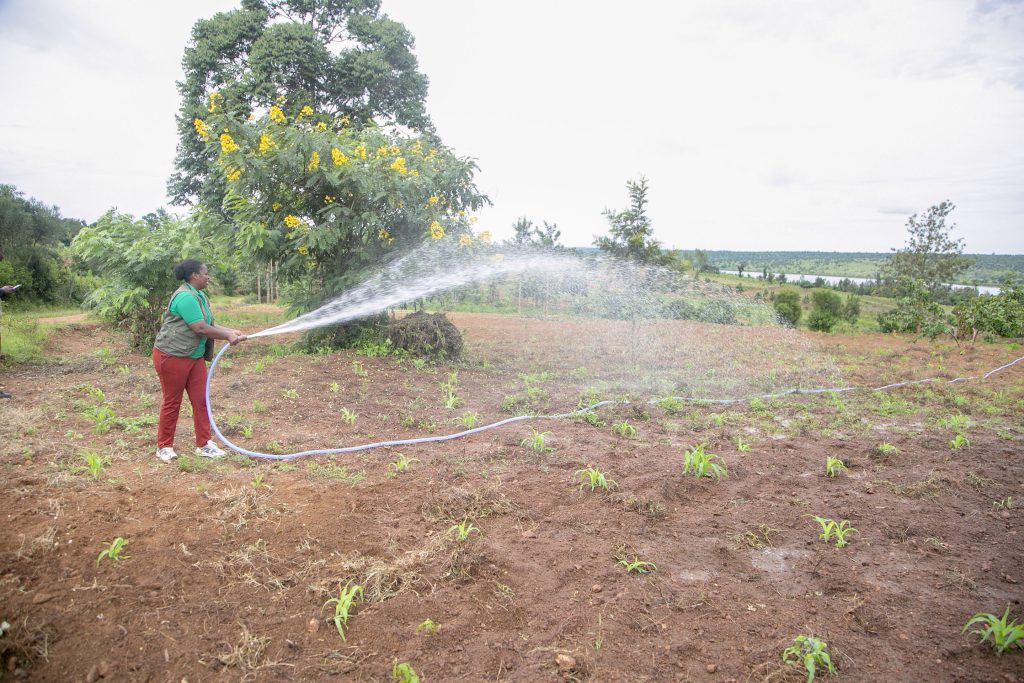
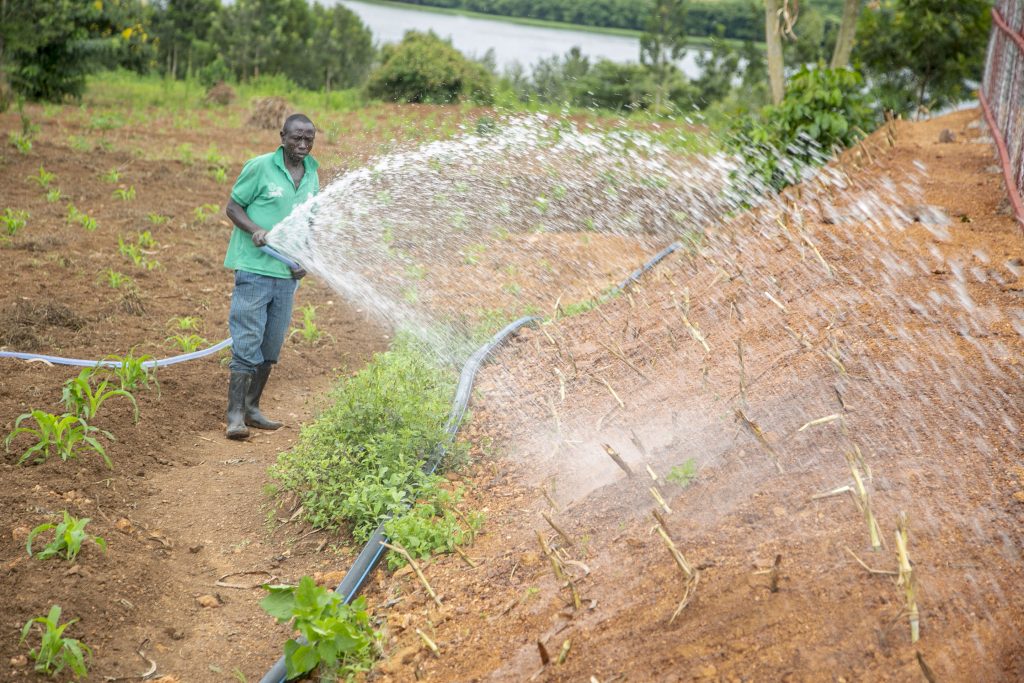
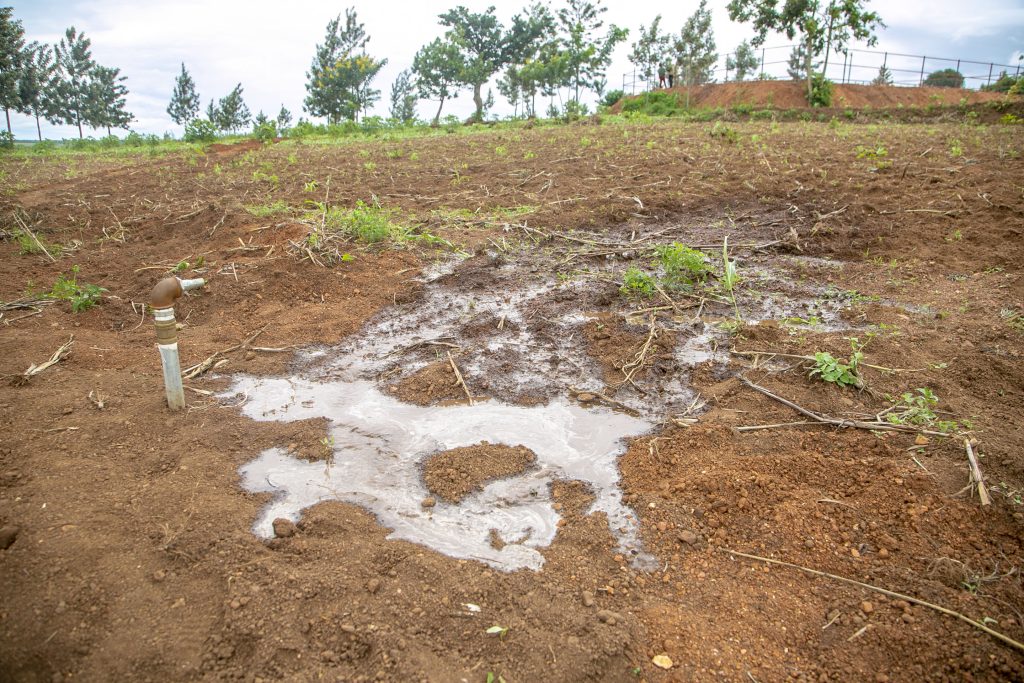
- Installation of solar-powered systems, with water now available at hydrants for irrigation use.
These systems will enable reliable irrigation across 35 hectares of farmland, significantly reducing dependence on rainfall and enhancing agricultural productivity in Mareba and Ngeruka Sectors.
STRENGTHENING CLIMATE RESILIENCE THROUGH NURSERY DEVELOPMENT
To support agroforestry and long-term environmental sustainability, the project has established a fully operational tree nursery.
Avocados and mangoes seeds were sown in a big number to achieve the target (5560 avocado seedlings and 5560 mango seedlings).
EMPOWERING COMMUNITIES THROUGH STRONG LOCAL INSTITUTIONS
Community engagement remains at the core of the project’s success. Key institutional achievements include:
- Formation of 10 farmer groups (Water users, women and youth) involving approximately 240 members;
- Establishment of a democratically elected Water Users Association (WUA) committee
These structures play a critical role in ensuring effective water management, coordination of activities, and the long-term sustainability of the irrigation systems. Importantly, the active inclusion of women and youth groups has strengthened participation, ownership, and inclusivity across all project activities.
JOB CREATION AND LOCAL IMPACT
The project has prioritized the employment of local community members, particularly those residing within the intervention area.Project beneficiaries and youth group members were given first consideration for these opportunities. In addition, landowners were engaged to excavate water channels on their own farms, ensuring the work was carried out with greater care and minimal damage to existing crops.
These employment opportunities contribute directly to improving household livelihoods while promoting environmentally sustainable practices within the community. They also help to minimize potential conflicts by fostering a sense of ownership and active participation among stakeholders.
LOOKING AHEAD
As the project enters its next phase, the focus will shift from infrastructure development to capacity building and knowledge transfer.
Key priorities include:
- Training farmers in climate-smart agriculture and agroecological practices
- Strengthening capacity of the Water Users Association committee members
- Establishing demonstration plots for sustainable farming techniques
- Enhancing financial literacy and savings through community groups
BUILDING A RESILIENT FUTURE
With strong community participation and effective stakeholder collaboration, the project is creating a solid foundation for sustainable irrigation management, improved agricultural productivity, and increased climate resilience in Bugesera District. APEFA remains committed to empowering vulnerable communities and promoting environmentally sustainable agricultural practices across Rwanda.