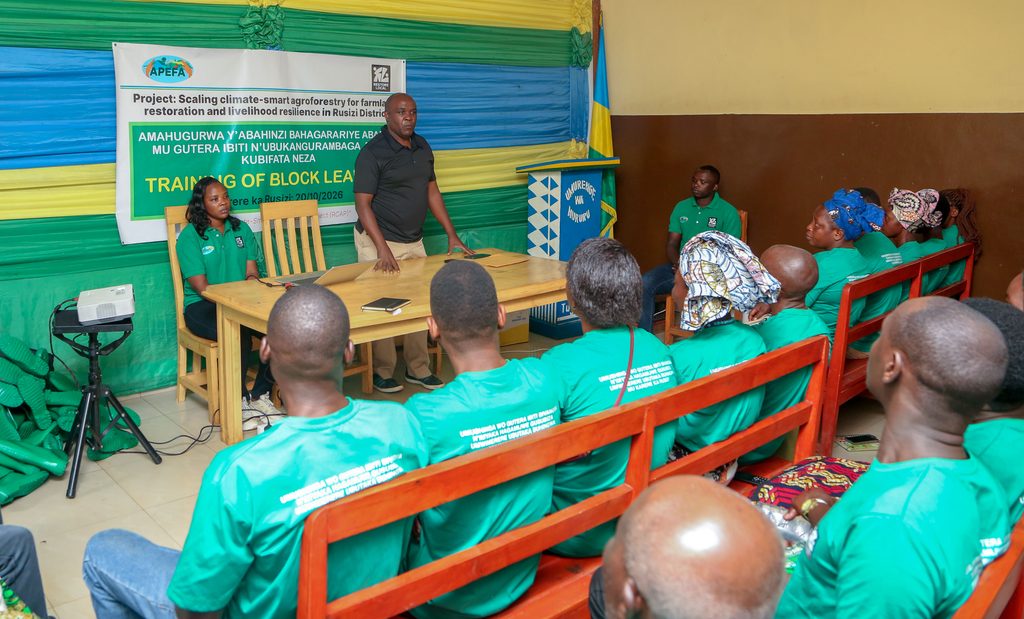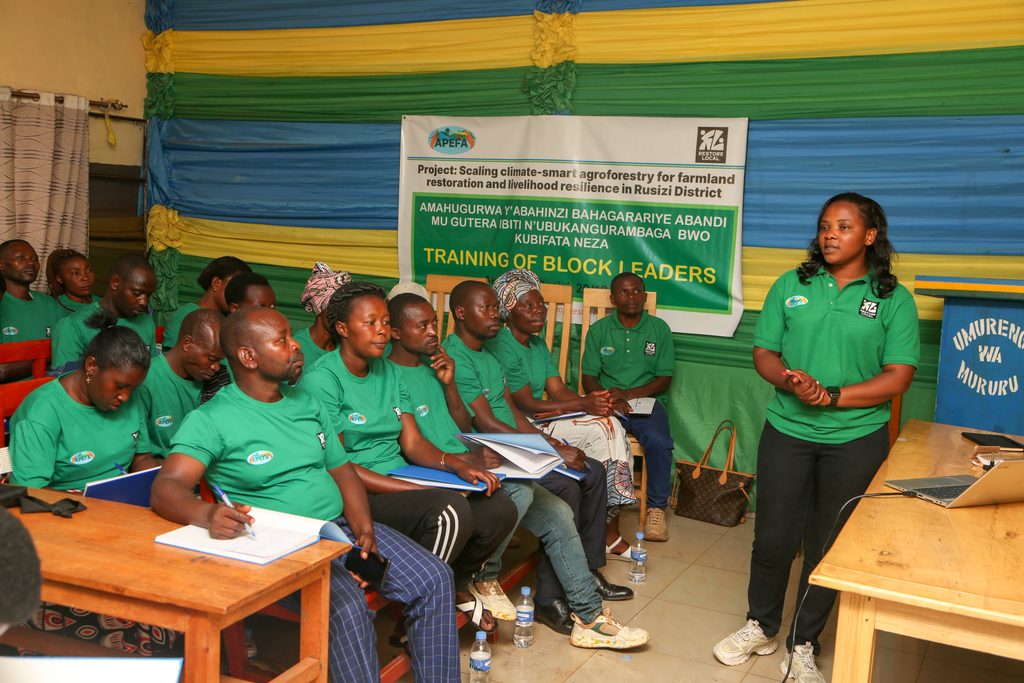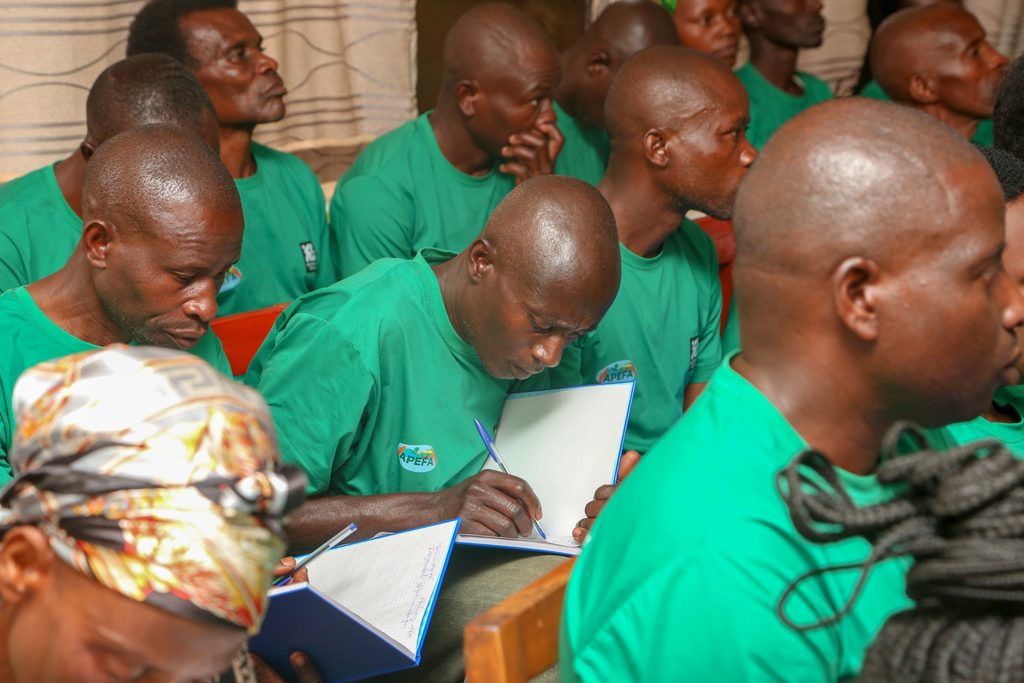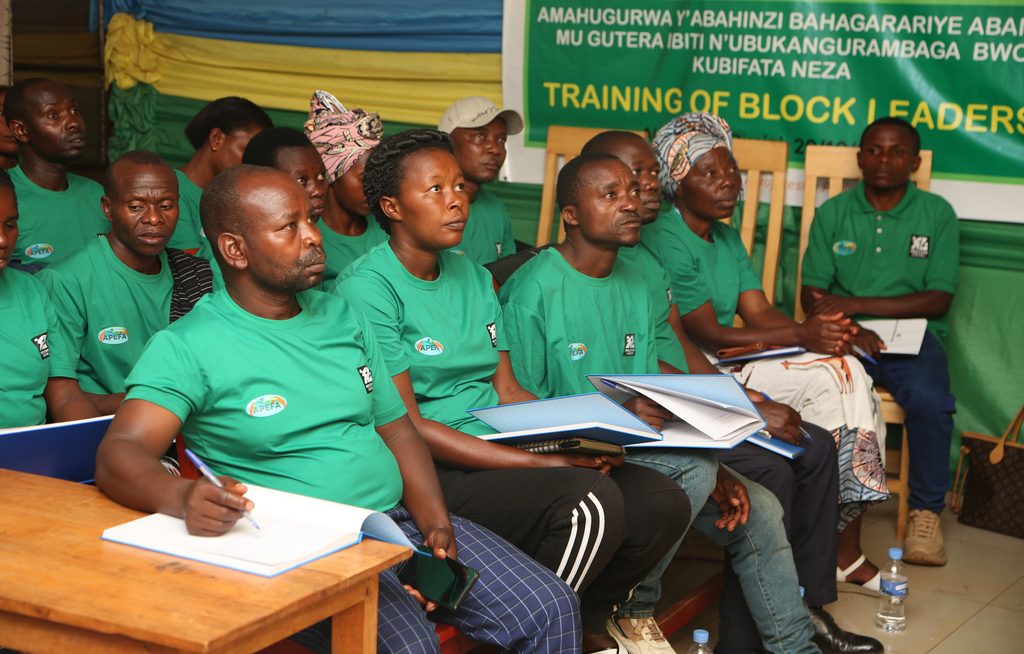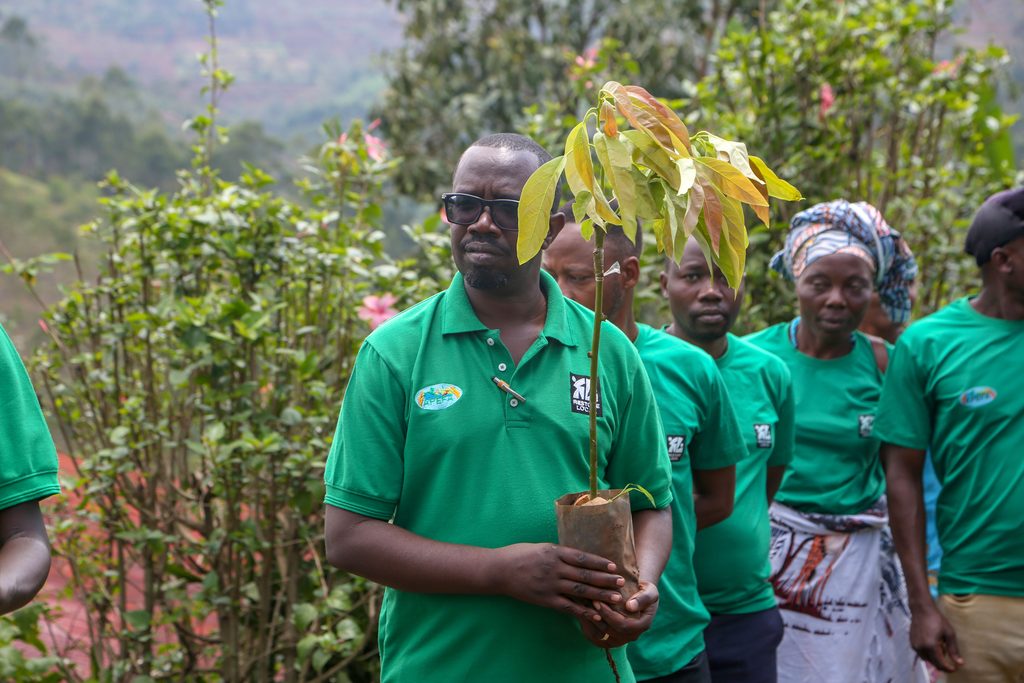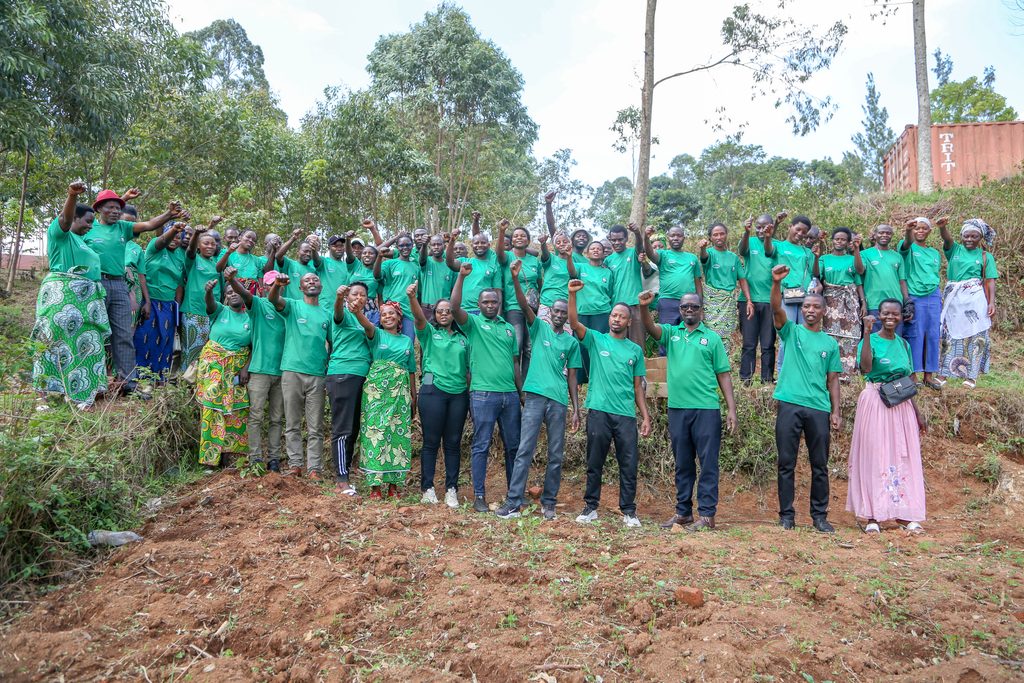
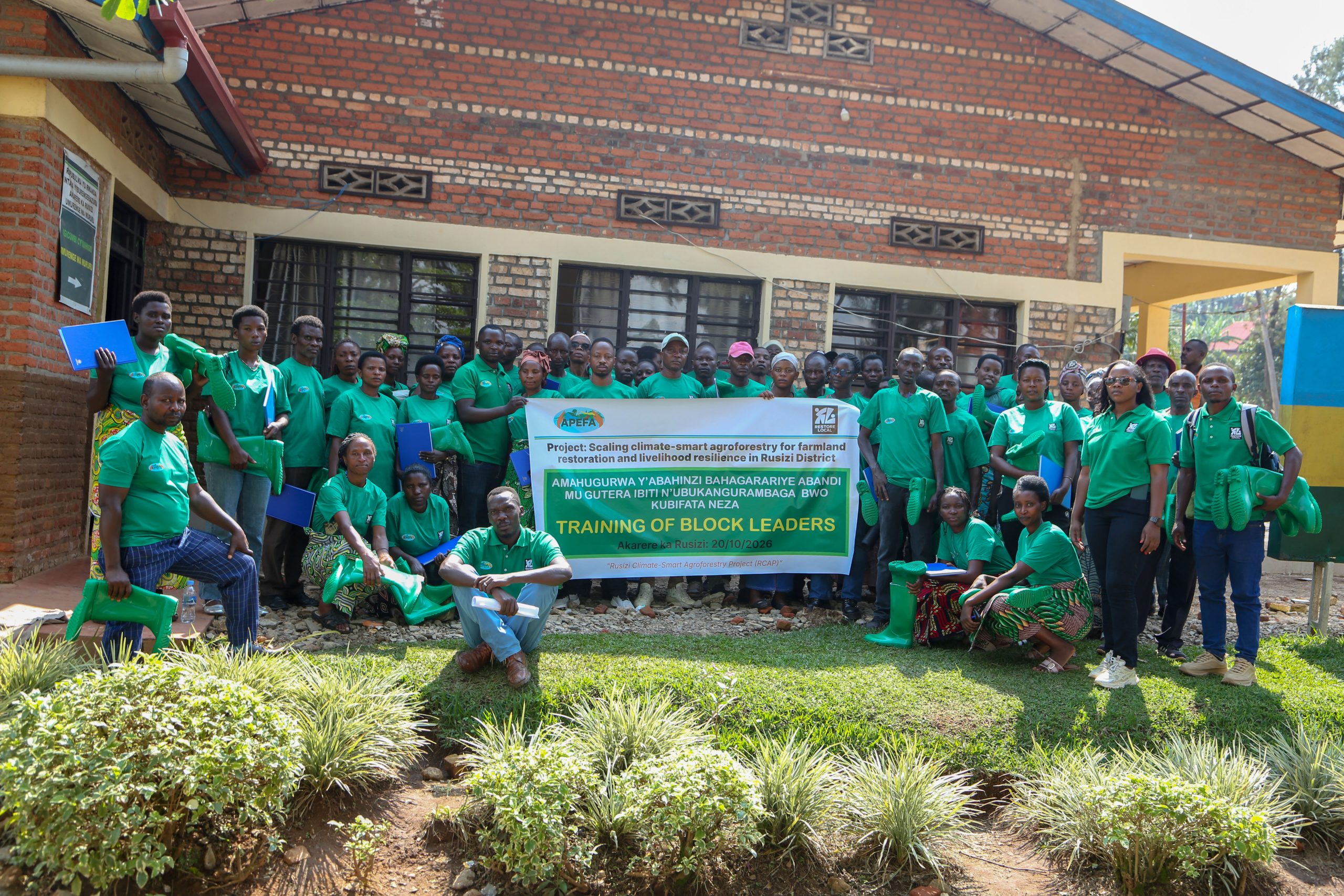
Action pour la Protection de l’Environnement et la Promotion des Filières Agricoles (APEFA) trained 47 Block Leaders from Mururu, Nyakarenzo, and Gashonga sectors in Rusizi District to strengthen community mobilization and support landscape restoration activities.
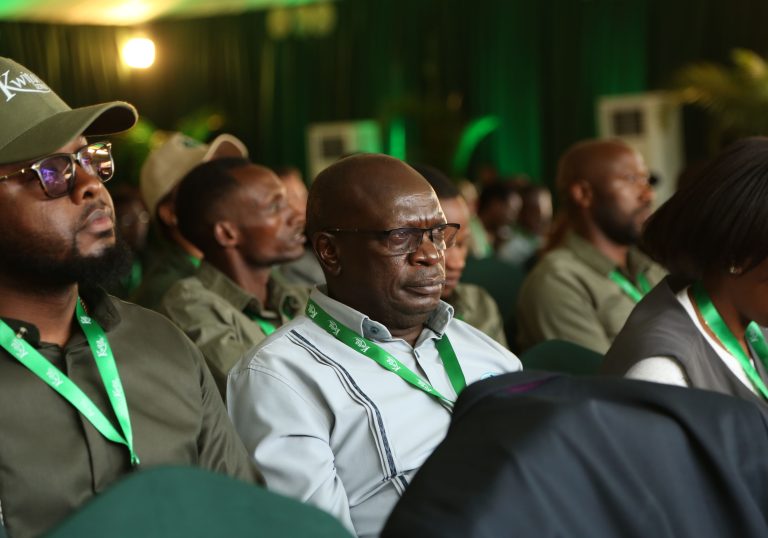
The training, held on 20 October 2026 at Mururu Sector Office, was conducted under the project ‘Scaling Climate Smart Agroforestry for Farmland Restoration and Livelihood Resilience in Rusizi District’. It aimed to equip Block Leaders with the knowledge and practical skills needed to mobilize beneficiary households, facilitate project implementation, and promote community ownership of restoration initiatives.
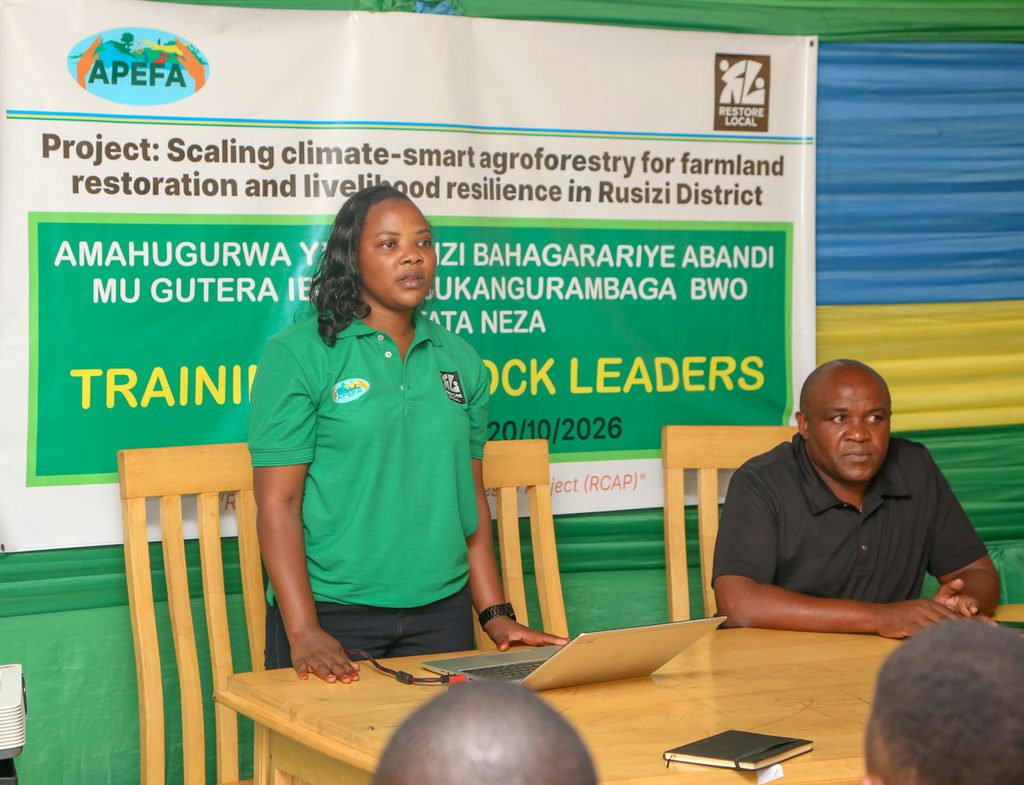
During the sessions, participants learned the project’s objectives, planned interventions, and expected results, with particular emphasis on how climate-smart agroforestry restores degraded farmland and strengthens livelihood resilience.
The training also clarified the roles and responsibilities of Block Leaders throughout the implementation process. These include mobilizing beneficiary households, raising awareness about the importance of selected tree species, supporting land preparation, verifying seedling distribution and planting, and monitoring tree survival.
In addition, participants learned how to identify implementation challenges, document progress, and communicate updates to the project team to strengthen coordination, accountability, and effective implementation at the community level.
From knowledge to practice: Demonstrating proper tree-planting techniques
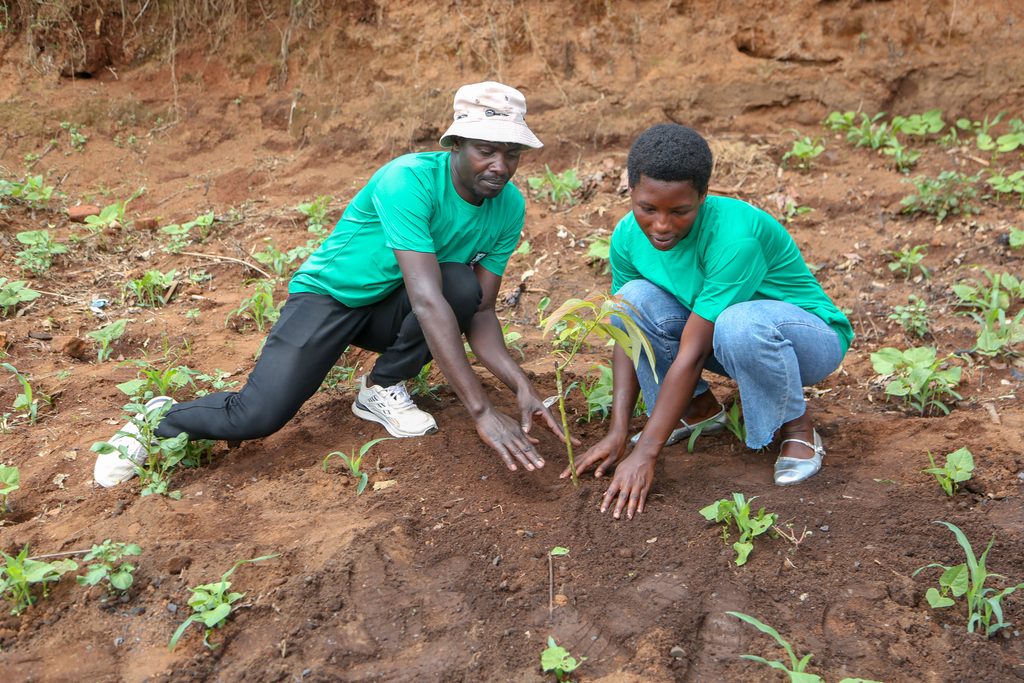
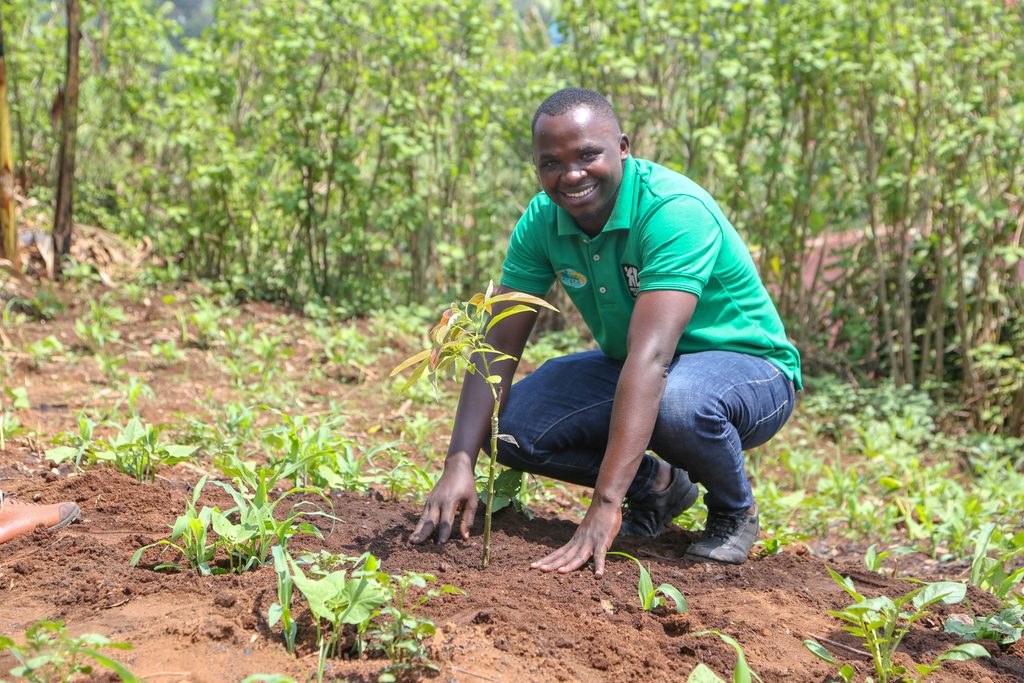
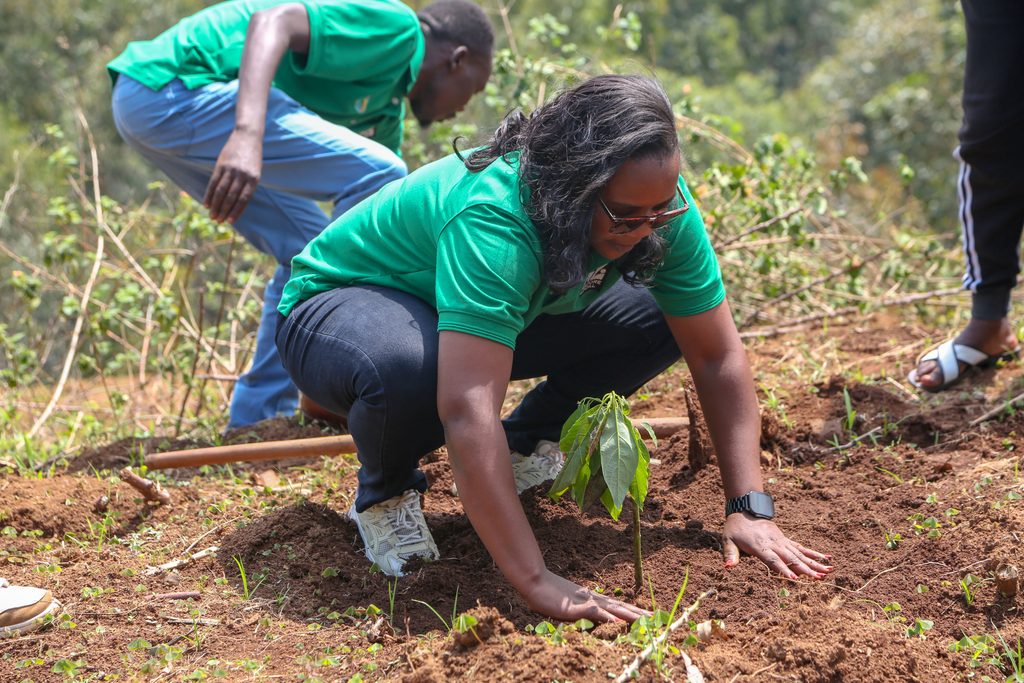
The training included a practical demonstration of tree-planting techniques, allowing participants to apply their newly acquired knowledge in the field.
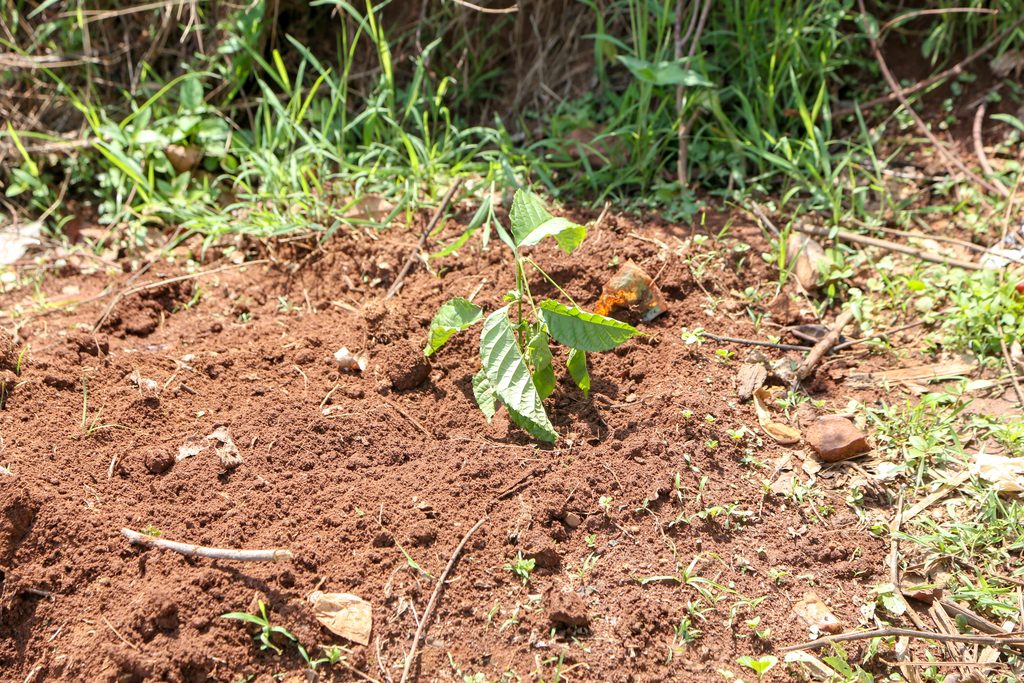
Participants practiced planting different tree species, including avocado (Persea americana), Maesopsis eminii, and Markhamia lutea, which are among the species being promoted through the project’s restoration interventions.
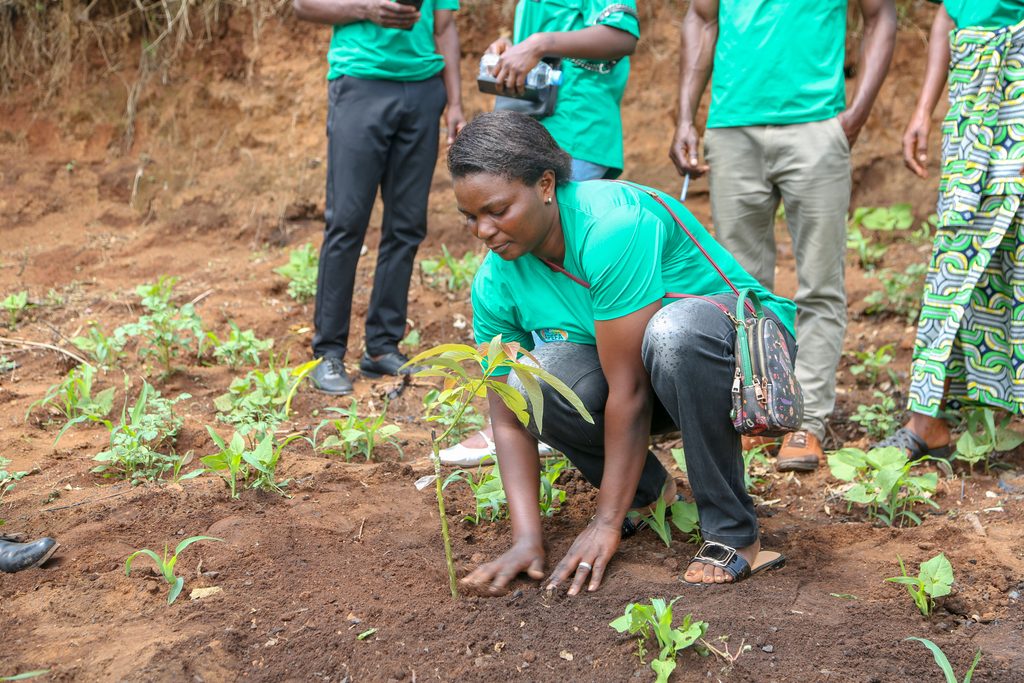
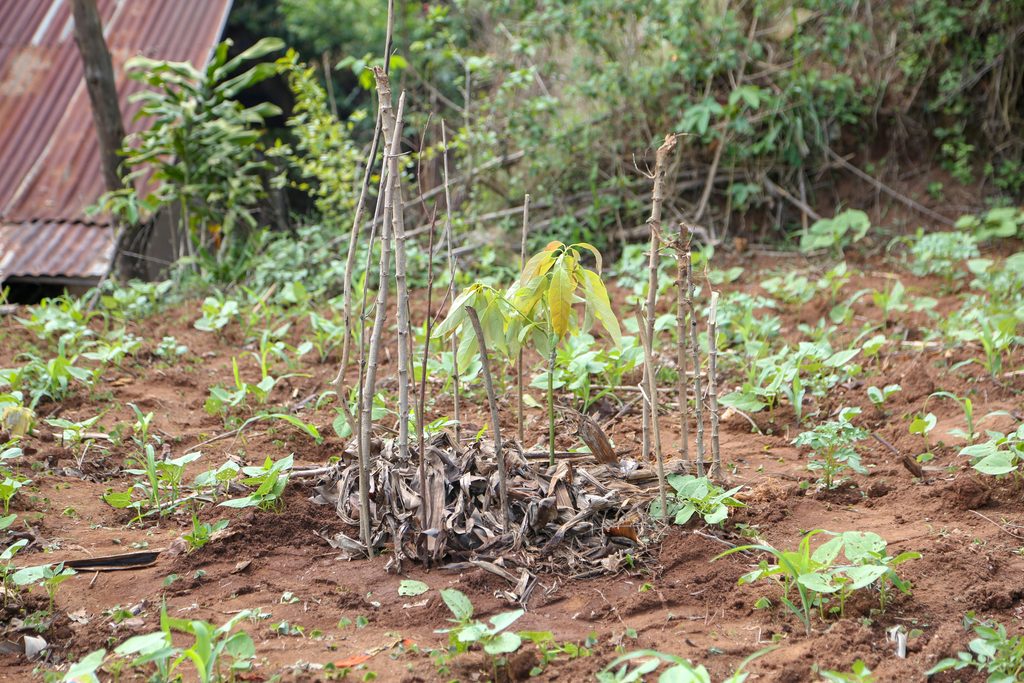
The practical session emphasized the importance of proper site preparation, careful seedling handling, appropriate planting techniques, and post-planting management to improve seedling establishment and survival.
Participants also gained practical knowledge of essential tree-maintenance practices, including watering when necessary, weeding, mulching, protecting seedlings from livestock, and timely replacement of dead seedlings.
These skills are expected to help Block Leaders provide practical guidance to beneficiary households and encourage proper management of planted trees beyond the initial planting exercise.
Strengthening community ownership for sustainable restoration
By building the capacity of Block Leaders, APEFA seeks to strengthen community-based structures that support the implementation, monitoring, and long-term sustainability of landscape restoration activities.
As key links between the project team and beneficiary households, Block Leaders are expected to encourage community participation, guide households in proper tree planting and maintenance, monitor restoration progress, and report challenges that may affect implementation.
Their involvement is essential to fostering collective responsibility, accountability, and peer learning within restoration blocks, ensuring that landscape restoration becomes a shared community effort rather than a one-time activity.
Through the project ‘Scaling Climate-Smart Agroforestry for Farmland Restoration and Livelihood Resilience in Rusizi District , APEFA continues to promote community-led climate-smart agroforestry as a practical approach to restoring degraded farmland, improving environmental sustainability, and building resilient livelihoods.
MORE PHOTOS